Cryptocurrency bitcoin price
Its Bitcoin holdings are the third-largest among public companies, trailing only Strategy, formerly MicroStrategy and Bitcoin mining firm MARA Holdings at 568,840 Bitcoin and 48,237 Bitcoin, respectively https://no-deposit-bonus-casino.net/.
The fund, called VBILL, will be initially available on Avalanche, BNB Chain, Ethereum and Solana blockchains, VanEck said in a May 13 statement. The fund’s minimum subscriptions start at $100,000 for investments running on Avalanche, BNB Chain, and Solana, while the minimum subscription on Ethereum is $1 million.
Investment firm VanEck is launching a tokenized real-world asset (RWA) fund that offers exposure to US Treasury bills, developed in partnership with tokenization platform Securitize. The initiative places VanEck among a growing number of traditional finance firms entering the RWA tokenization space.
Cryptocurrency
On November 2, 2023, Sam Bankman-Fried was pronounced guilty on seven counts of fraud related to FTX. Federal criminal court sentencing experts speculated on the potential amount of prison time likely to be meted out. On March 28, 2024, the court sentenced Bankman-Fried to 25 years in prison.
On November 2, 2023, Sam Bankman-Fried was pronounced guilty on seven counts of fraud related to FTX. Federal criminal court sentencing experts speculated on the potential amount of prison time likely to be meted out. On March 28, 2024, the court sentenced Bankman-Fried to 25 years in prison.
Cryptocurrencies represent a new, decentralized paradigm for money. In this system, centralized intermediaries, such as banks and monetary institutions, are not necessary to enforce trust and police transactions between two parties. Thus, a system with cryptocurrencies eliminates the possibility of a single point of failure—such as a large financial institution setting off a cascade of global crises, such as the one triggered in 2008 by the failure of large investment banks in the U.S.
As of February 2018 , the Chinese government has halted trading of virtual currency, banned initial coin offerings, and shut down mining. Many Chinese miners have since relocated to Canada and Texas. One company is operating data centers for mining operations at Canadian oil and gas field sites due to low gas prices. In June 2018, Hydro Quebec proposed to the provincial government to allocate 500 megawatts of power to crypto companies for mining. According to a February 2018 report from Fortune, Iceland has become a haven for cryptocurrency miners in part because of its cheap electricity.
There exist multiple methods of storing keys or seed in a wallet. These methods range from using paper wallets (which are public, private, or seed keys written on paper), to using hardware wallets (which are hardware to store your wallet information), to a digital wallet (which is a computer with software hosting your wallet information), to hosting your wallet using an exchange where cryptocurrency is traded, or by storing your wallet information on a digital medium such as plaintext.
Some miners pool resources, sharing their processing power over a network to split the reward equally, according to the amount of work they contributed to the probability of finding a block. A “share” is awarded to members of the mining pool who present a valid partial proof-of-work.
Cryptocurrency shiba inu
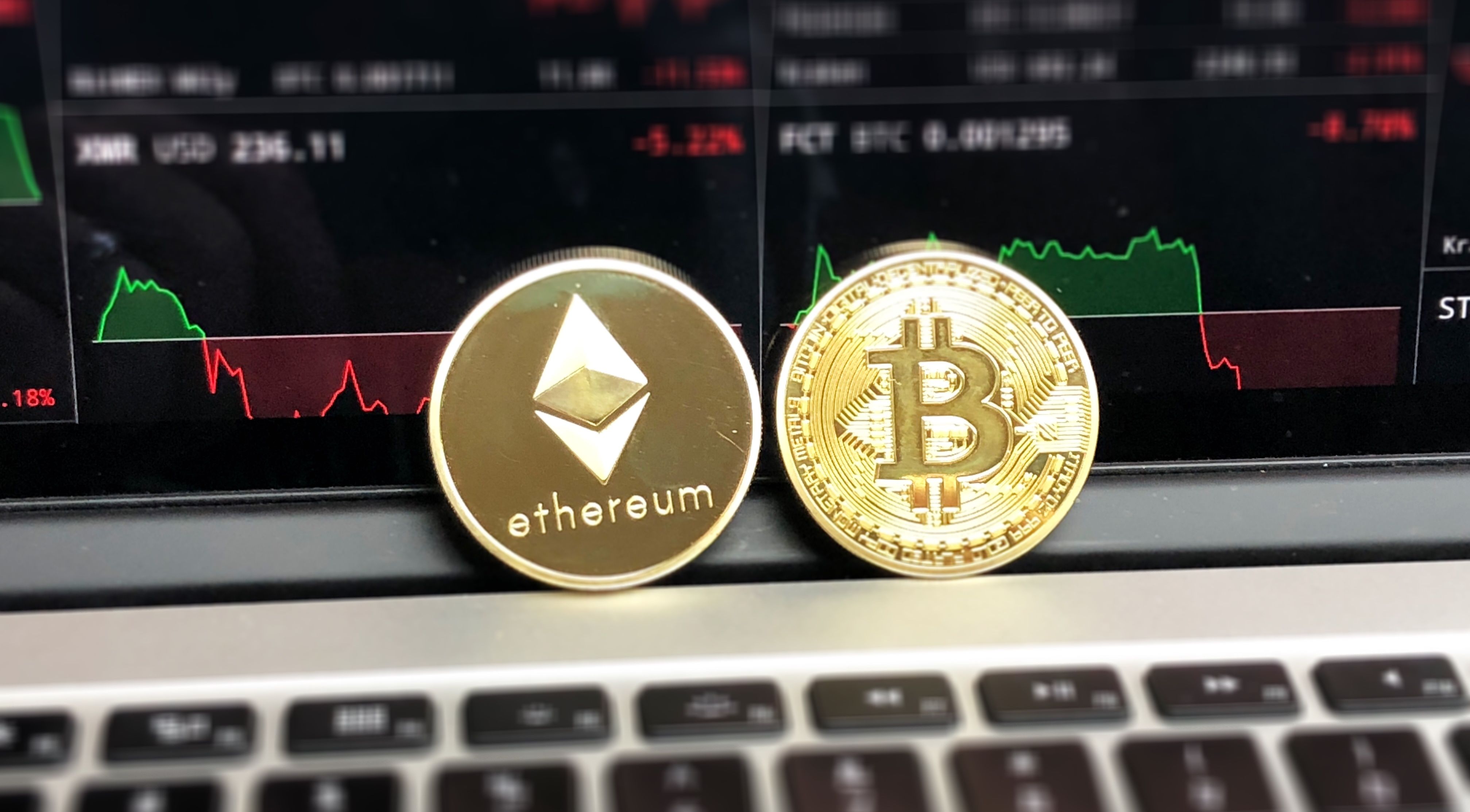
However, greater congestion on Ethereum means that transactions can get slower and more expensive in terms of gas fees. As a result, many scaling solutions have been launched that take care of both of these problems.
According to the paper, Shiba Inu was developed to answer a simple question: “What would happen if a cryptocurrency project was 100% run by its community?” Its founder, Ryoshi, attributes its origins to an “experiment in decentralized spontaneous community building.” According to Ryoshi, the power of collective decentralization can build something stronger than a centralized team ever could create.
The Shiba Inu website suggests that the act of giving this SHIB to Buterin was burning in itself, and that it was done so for safekeeping. Critics point out that it was purely a publicity stunt, performed in an attempt to gain legitimacy as an asset held by Buterin.
Disclaimer: This page may contain affiliate links. CoinMarketCap may be compensated if you visit any affiliate links and you take certain actions such as signing up and transacting with these affiliate platforms. Please refer to Affiliate Disclosure
Pi network cryptocurrency
Pi Network follows a one-account-per-person policy through its Know Your Customer (KYC) solution. This system combines machine automation and human verification to authenticate user identities while preserving privacy. The KYC process emphasizes real individuals, combats fraudulent activities and enables fair participation in the mining process of the network. Pi’s identity verification approach balances scalability, security, and accessibility, allowing millions of users worldwide to validate their accounts while maintaining regulatory compliance.
Pi Network has to navigate a tricky world of global rules about whether it’s a security, meeting anti-money laundering and KYC rules (which it’s working on), protecting user data (like GDPR), and how it’s taxed. There isn’t much public info about thorough, independent security checks on Pi Network’s main system, which still makes some experts uneasy.
Writer by choice, CryptoCurrency Writer, and Researcher by chance. Currently, focusing on financial news and analysis, as well as cryptocurrency news and data. One may not call me a crypto “Enthusiast” but trust me I’m getting there.
Out of 100 billion Pi coins, a big slice (80%) is meant for the community. The idea is for Pi coins to be used for sending money between people, buying things in its own marketplaces (like Pi Chain Mall or Daabia Mall), and using a growing number of apps for shopping, social stuff, games, and maybe even finance (DeFi). Things built into the platform itself, like the Pi Ad Network and special features in its chat for staking Pi, are also meant to get people using it.
Pi Network was founded by Dr. Nicolas Kokkalis and Dr. Chengdiao Fan, both of whom have PhDs from Stanford University and a passion for improving human lives through technology. Dr. Nicolas Kokkalis is a Stanford PhD in EE and postdoc in CS with research on distributed systems and human-computer interaction. His work focuses on combining distributed systems and human computer interaction to bring cryptocurrency to everyday people. As a strong and long-term believer of the technical, financial and social potential of cryptocurrencies, he is determined to move them beyond their current limitations and is committed to bringing the power of blockchain to more people.

Leave a Reply